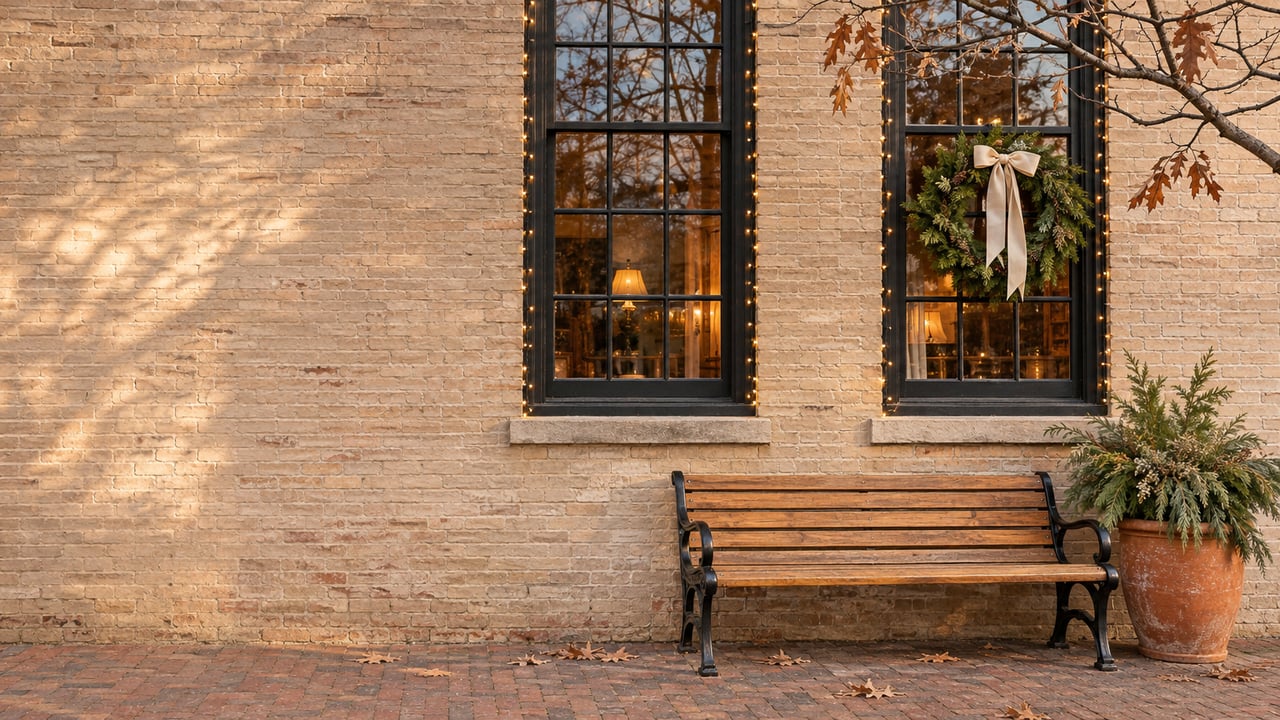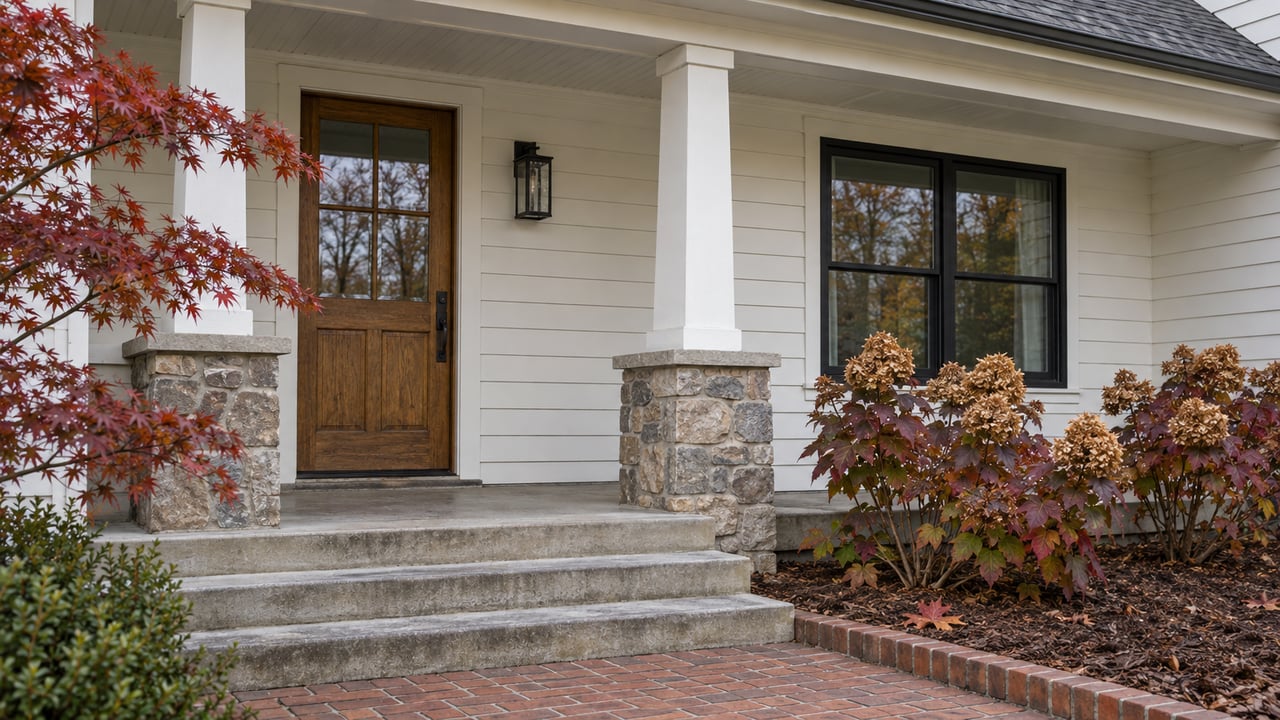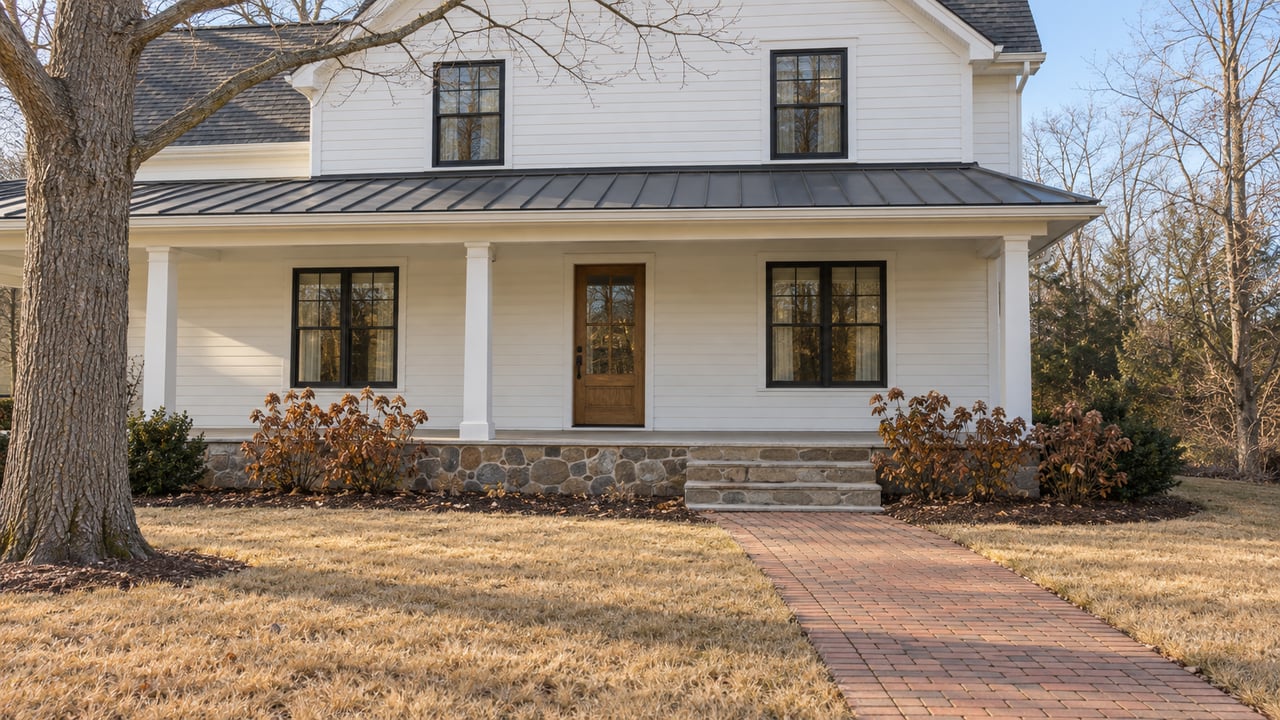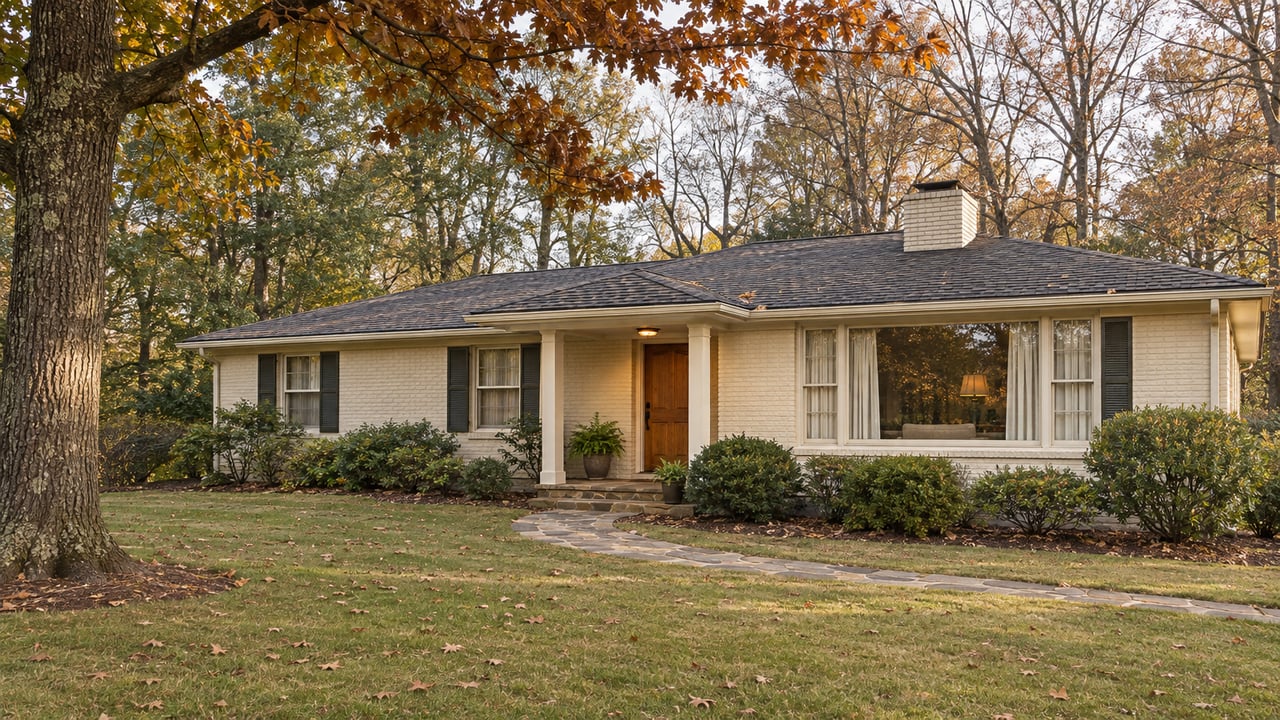
Start at Oakwood Cemetery and walk the blocks of 4th, 5th and 6th Streets NW. You are in the oldest part of Oakwood. Hickory's businessmen, bankers and industrialists began building houses here in the 1880s and 1890s, set back on large, shady lots in Queen Anne, Shingle, Colonial Revival, Spanish Mission Revival, Tudor Revival and Bungalow styles. The earliest house identified in the original historic survey is the 1882 Michael L. Cline House, and the cemetery dates to 1889.
Keep walking toward 7th Street NW, or up 6th Street NW into the 500 block, and the houses get smaller and lower. Many were built in the 1920s through the 1950s. Since 2019, these blocks have also been part of the Oakwood National Register Historic District. So "historic Oakwood" in a listing can now describe a Queen Anne built for a banker or a postwar cottage on a smaller lot, and those two houses belong in different price comparisons.
How Oakwood Grew From 55 Acres to 136
When Oakwood was first listed on the National Register in March 1986, the district covered 69 parcels on 55 acres, with houses dating from 1880 to 1940, according to Focus Newspaper. In 2019, the National Park Service approved a boundary increase that added 81 acres and 187 parcels. Those parcels hold mostly Craftsman Bungalow, Colonial Revival, Tudor Revival, Period Cottage and Ranch houses built between 1905 and 1966, along with the Elliott Carnegie Library and Oakwood Elementary School.
In the same Focus report, City Planner Ross Zelenske said the expansion "represents the change of housing styles in the area." The added land was larger than the original district, so most of the acreage now carrying the Oakwood historic name holds houses from the middle of the 20th century, not the Victorian era.
Oakwood is also one of the City of Hickory's three local historic districts, along with Kenworth and Claremont. All three date to around 1985, and the city publishes its own Oakwood Local Historic District map. That map and the National Register boundary are separate records. Look up any address you're considering on both.
Two Housing Stocks Under One Name
The original district was built for Hickory's most prominent families. The 1980s survey documented substantial houses on large, landscaped lots. It names houses such as the Abel A. Shuford House on Third Avenue, the Walker Lyerly House built in 1913, and the J. H. P. Cilley House at Third Avenue and Fourth Street. The Shuford House and Gardens is now a wedding and event venue.
The 2019 nomination describes the expansion as mostly 1920s to 1950s housing. Minimal Traditional and Ranch houses stand alongside Craftsman and Period Cottage designs. The expansion covers parts of 1st through 8th Streets and Avenues NW, 2nd Street Place NW, 4th Avenue Drive NW and North Center Street, and some sections have smaller lots and shallower setbacks. The 300 block of 7th Street NW, the 500 block of 6th Street NW and the 300 block of 3rd Street NW appear in the nomination's photographs of the expansion area.
West of Oakwood is Hillcrest, which the city groups with Oakwood as one neighborhood. It was platted in 1940 on land from the J. A. Lentz and E. B. Cline estates, and most of its houses date from the 1940s through the 1970s. The exception is the J. A. Lentz House at 321 9th Street NW, a 19th-century frame house listed on the National Register. The city describes the combined area as roughly bounded by 1st Street NW, 1st Avenue NW, Old Lenoir Road and 8th Avenue NW. Within those bounds, you can find houses from nearly every decade between the 1880s and the 1970s.
What Oakwood Owners Have Done With These Houses
The Hickory Landmarks Society's spring Home and Garden Tour shows the inside of several of these houses. The May 16, 2026 tour included the 1914 B. B. Blackwelder House at 224 Third Avenue NW. Its owners bought it in April 2022, reconfigured the interior, and now run it as both a family home and the Dragonfly Inn. The same tour opened the J. Summie Propst House museum, built in 1882 and 1883 and moved to its current site in 1970 through the Society's preservation work. The May 17, 2025 tour featured a sympathetic remodel of the Dr. George E. Bisanar House at 431 Sixth Street NW and the preserved interior of the J. W. Shuford House at 417 Sixth Street NW. One owner updated and the other preserved, and both houses are on the same block. Before you price an older Oakwood house, figure out which approach you have in mind, because the two lead to very different budgets.
Why Hickory's Median Can't Price an Oakwood House
You've probably already seen Hickory's citywide numbers on the portals. In September 2026, the city's median sales price was $300,000, down 13.0% from $345,000 in September 2025, according to the Canopy Realtor Association's Local Market Update for September 2026. For January through September 2026, the median was $308,000, up 2.7% from the same months of 2025. In September alone, the average sales price fell 20.3%, to $328,698.
Prices didn't really drop 13% in a year that was up 2.7% overall. Hickory closed 95 sales in September 2026. With that few sales, a handful of larger homes closing in one month and not the next is enough to move both the median and the average, and Canopy's report notes that percent changes "can sometimes look extreme due to small sample size." The same thing happens inside Oakwood. A few sales near the cemetery can make the neighborhood look expensive, and a few postwar cottages can make it look like a bargain. A median tells you which kind of house happened to sell that month.
The figures that do carry over to Oakwood are about time and negotiation. For January through September 2026, cumulative days on market until sale in Hickory averaged 63, up 18.9% from the same period of 2025. In September, sellers received 94.0% of their original list price on average. Inventory was 329 homes, or 3.9 months of supply. Homes are taking longer to sell, and they are closing a little below their first asking price. That gives a buyer some room to negotiate this winter, as long as the price you're negotiating from is based on the right comparison.
That comparison should be built by era and lot. A Queen Anne on Third Avenue NW should be measured against other large, early houses on deep lots. A Period Cottage on 7th Street NW should be measured against cottages and ranches of its own decade and size, whether or not their listings say "Oakwood."
Questions Oakwood Buyers Ask
Is Hillcrest part of the Oakwood historic district?
Hillcrest is a separate, later neighborhood that shares the city's Oakwood/Hillcrest neighborhood designation. Most of its houses date from the 1940s through the 1970s.
How do neighbors share news without an active association?
The city lists the Oakwood/Hillcrest Neighborhood Association as inactive. Residents get updates through an email list called the Hillcrest Hotline and talk with each other on Nextdoor. You can find more about the area's parks and fall events in our earlier post, In Oakwood-Hillcrest, Fall Splits Into Two Calendars, and on the Oakwood neighborhood page.
If you're deciding between an Oakwood Victorian and a 1940s cottage a few blocks away, I'd love to pull comparable sales for each one from houses of its own era and lot size, so you know what each is really worth before you make an offer. Tiffany Ramirez grew up in Catawba County and would be glad to walk Oakwood's streets with you. Let's Connect.