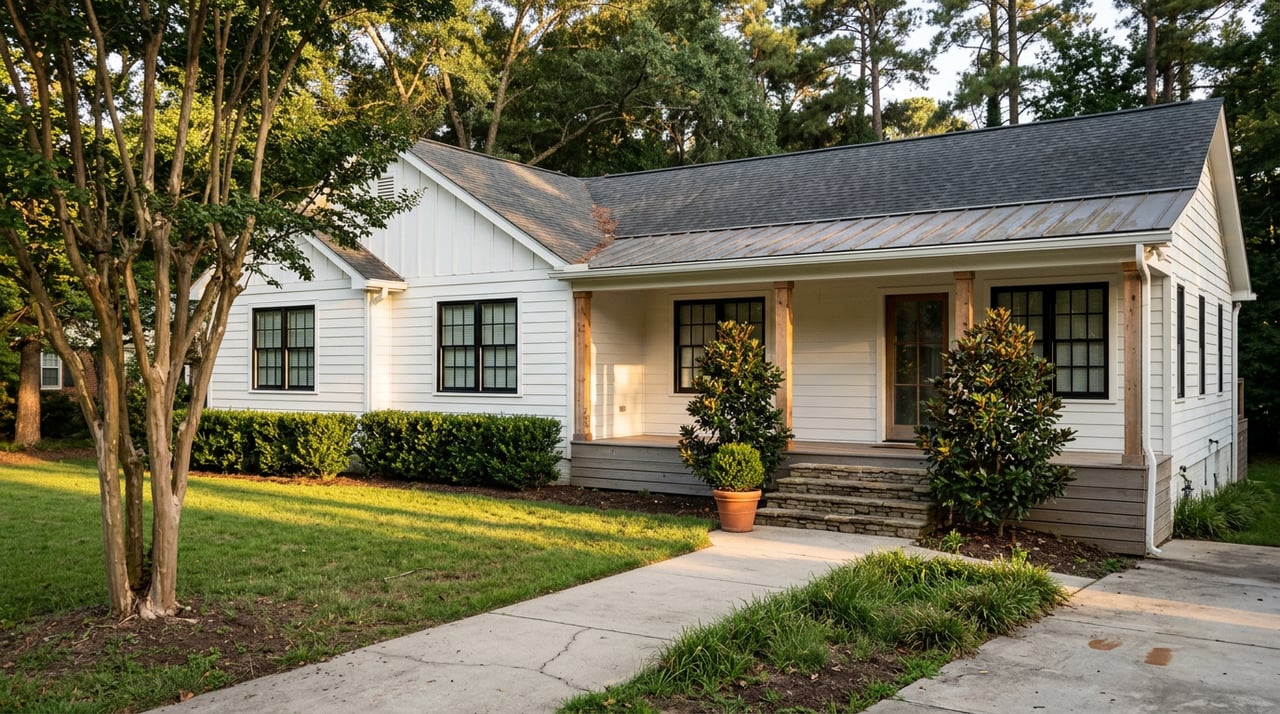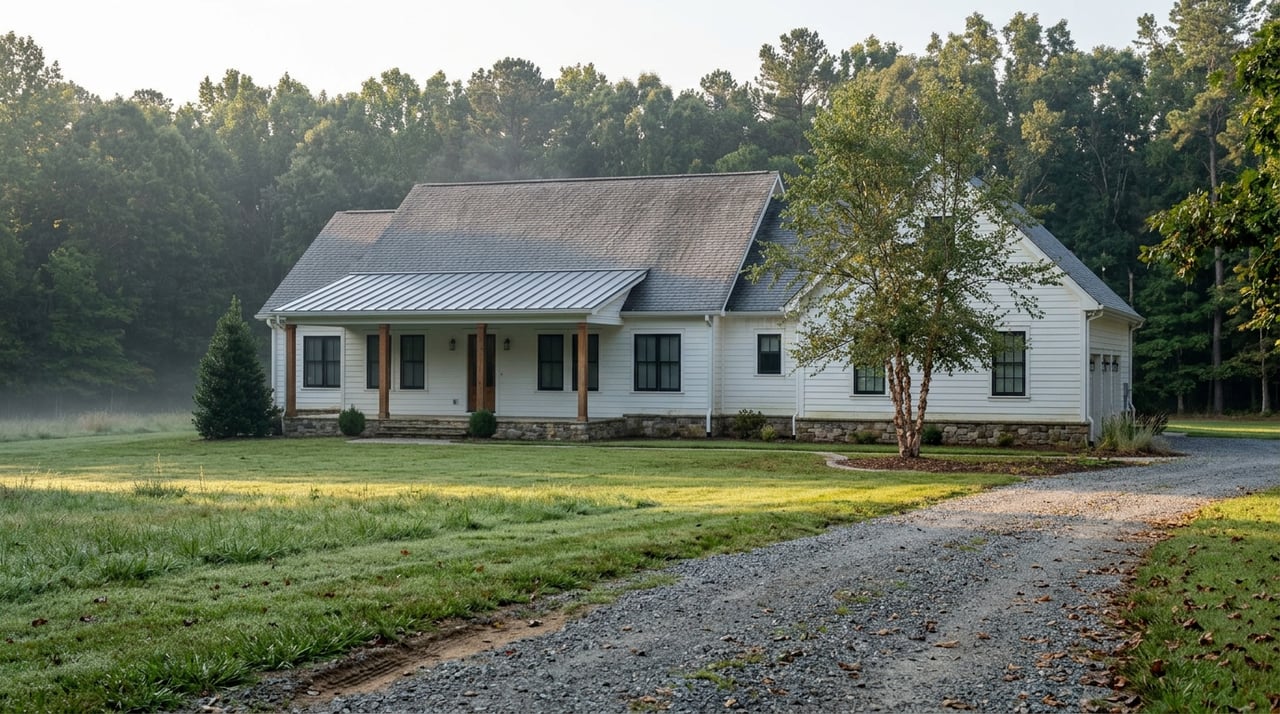
Two properties are sitting in the same zip code this month. One is a hundred-acre estate off NC 73 Highway that closed this spring at $14 million, the highest residential sale Lincoln County has ever recorded. The other is a wooded 2.06-acre homesite over in the Autumn Woods community, listed with a line you rarely see anywhere else: bring your own builder, no HOA, no perc test available. Both are Iron Station real estate. Neither one tells you what a typical buyer should expect to pay, because in Iron Station there isn't a typical buyer.
That gap is the part most market summaries skip, and it's the reason the "median home price" for Iron Station seems to change depending on which site you check and which week you check it.
The Numbers Don't Agree, and That's the Story
In March 2026, one housing data platform put Iron Station's median sale price at $334,000, based on just three homes selling that month, with houses sitting on the market for 135 days. By May, another site had the median list price at $475,000. By late August, a for-sale-by-owner aggregator was quoting a median list price of $570,438, with the average list price for single-family homes over a million dollars.
A separate May snapshot found the median list price at $469,950 and the average at $895,370, a gap nearly double the median. When average and median sit that far apart, it usually means a small number of expensive properties are pulling the average up while most of the actual inventory sits well below it. One statewide records site put it even more plainly: among 141 active listings in the 28080 zip code, list values ranged from $57,709 to $3,234,483, and recently sold homes ranged from $101,929 to $1,961,684.
None of these sources are wrong, exactly. They're describing different slices of a market that doesn't sort itself into one price band the way a typical subdivision does. A handful of homes trade in Iron Station in any given month, so one large land sale entering or leaving that small sample can swing the median by tens of thousands of dollars in either direction. Treating any single number from any single site as "the" Iron Station price is where buyers get themselves turned around.
Why One Zip Code Holds Two Different Markets
The reason for the split isn't random. Most of Iron Station falls under Lincoln County's Rural Living zoning district, which caps density at 1.35 units per acre. Layer on top of that the WS-IV Protected Area designation for the Catawba and South Fork Catawba River watershed, which limits new residential development to 3.0 units per acre, or down to 2.0 units per acre if curb and gutter are installed. Those rules exist to protect the drinking water supply downstream, not to manage home prices, but the side effect is that a large share of the land around town stays in big, un-subdivided parcels rather than getting cut into standard quarter-acre lots.
Pair that zoning with the fact that municipal water and sewer lines don't reach most of the area, and you get a place where nearly every new home needs its own well and septic system. A septic contractor working across Lincoln County has described the area's growth as tied directly to Charlotte's expansion and to Lake Norman's western shore, and notes that rural lots in the western and northern parts of the county tend to be more straightforward for a conventional system, while land closer to Denver and Sherrills Ford more often runs into variable water tables and clay soils that complicate system design. In plain terms, the cost of putting a house on a given lot depends heavily on that lot's specific soil and terrain, not just its square footage or its distance to Charlotte.
Zoning that favors large parcels, plus a wastewater system that has to be engineered lot by lot, is what produces a market where a starter homesite and a hundred-acre estate can share a zip code and a real estate agent's search filter, but almost nothing else.
What the $14 Million Sale Actually Proves
The record sale at 3979 NC 73 Highway is worth understanding for what it demonstrates rather than what it predicts. The estate sits on roughly 100 acres, was built in 2021, and offers more than 5,400 square feet of living space with a main-level primary suite and guest quarters. It sold this spring for more than double the county's previous residential sales record of $6.85 million, and the listing agent framed it as part of a broader pattern in the Lake Norman region: buyers looking for large land holdings and private estates are expanding their search beyond the traditional waterfront towns of Cornelius, Davidson, and Mooresville.
That sale isn't a signal that Iron Station home prices tripled overnight. It's a signal that when a market this small includes even one acreage estate in its sales data, the average price for the whole area can jump by hundreds of thousands of dollars without a single ordinary home changing in value. If you're comparing "Iron Station" to a neighboring town on a spreadsheet of averages, you're comparing apples to a very large, very specific orchard.
What This Means When You're Standing in a Driveway
Before you let any published "typical price" set your expectations, the more useful question is what kind of lot you're actually looking at.
- Is the home inside a platted subdivision with recorded HOA covenants, or is it raw acreage advertised as bring your own builder?
- Does the property already have county water available, or will you need to drill a well?
- Has a soil evaluation and septic Improvement Permit already been completed for this specific lot, or is that step still ahead of you?
These aren't small details to sort out after you've fallen in love with a floor plan. NC State Extension's guidance for buyers on land needing a septic system recommends determining the soil type, confirming what kind of system that soil will support, and getting an Improvement Permit from the local health department before you purchase, since a septic system installed in unsuitable soil can fail and become an expensive, unpleasant problem to fix. Locally, Lincoln County's own planning process requires an Authorization to Construct for well and septic from the Environmental Health office before building plans are accepted for review, unless the parcel already has public water and sewer access. That's a meaningfully different pre-closing checklist than what a buyer moving from a municipal-utility neighborhood is used to.
None of this means Iron Station is a harder place to buy. It means the usual shortcuts, a quick glance at a zip code median or an assumption that comps work the same way they did in your last town, don't hold up here the way they would somewhere with uniform lot sizes and city water on every street.
The Question Worth Asking Your Agent
If you're relocating into Lincoln County or comparing Iron Station against Denver, Lake Norman, or another part of the Charlotte metro's outer ring, the number that matters most isn't the median you find on any single site. It's whether the specific lot you're considering sits on unrestricted acreage or inside a covenanted subdivision, and whether the well and septic groundwork is already done or still sitting in front of you.
That's the kind of local translation Tiffany Ramirez walks buyers through every day, whether the search is centered on Iron Station's open land or a lake-community lot closer to Denver. If you're weighing a move into this part of Catawba or Lincoln County and want someone to make sense of the numbers before you write an offer, let's connect.